Farhang Morady 22 June 2026
The United States and the Islamic Republic have signed a Memorandum of Understanding to end the Strait of Hormuz crisis and open a path to a final settlement of the war that began with the joint US and Israeli attack on Iran on 28 February 2026. Donald Trump announced the deal at a dinner in Versailles with French President Emmanuel Macron on 19 June. Under the agreement, Iran will gradually reopen the Strait of Hormuz and waive transit fees; the United States will lift its naval blockade and release frozen Iranian funds; a sixty-day extension of the April 8 ceasefire creates the window in which the deeper questions, on enriched uranium, sanctions, missiles, and a three-hundred-billion-dollar reconstruction fund, will be tested.
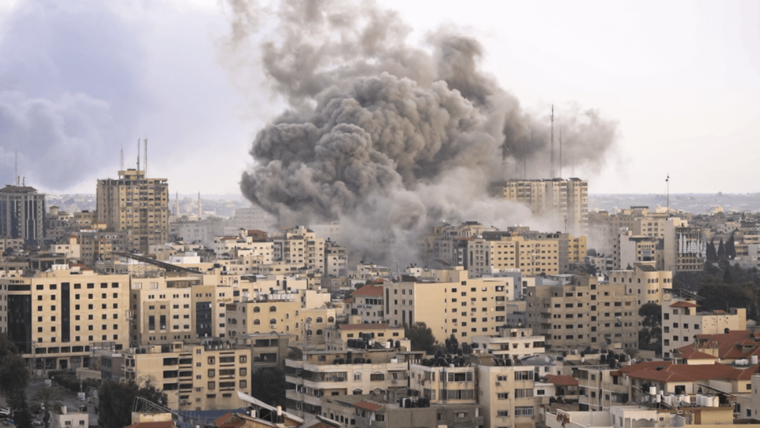
Washington and Tel Aviv’s initial objectives were to dismantle Iran’s nuclear and missile capability, force regime change, and clear the way for a new regional economic architecture stretching from Israel to the Gulf, built around AI, digital infrastructure and semiconductor manufacturing, all tied to American power. The killing of Supreme Leader Ayatollah Ali Khamenei in the opening strikes brought the country under his son Mojtaba’s leadership, but the state held. The MoU makes no reference to Iran’s missile arsenal or its support for regional militant groups, both previously presented as core US objectives. On the nuclear file, it commits Iran only to a “minimum” dilution of its stockpile of nine thousand kilograms of enriched uranium, on site and under IAEA supervision, rather than the surrender Trump had demanded. As I argued in A Fragile Equilibrium two months ago, the calm that followed the strikes was always an exhaustion, not a peace.
This war soon escalated into a fight over economic infrastructure. Oil installations, refineries, data centres, missile architectures and shipping lanes across the region are simultaneously assets and weapons. The Strait of Hormuz, through which over twenty per cent of the world’s petroleum supply passes, became the central battleground. Iran’s ability to close the Strait, and to keep it closed for more than three months, has shocked the global energy system and exposed the limits of American power to maintain the conditions on which it has depended. The MoU is the public face of that shift.
An entangled region
Iran has absorbed two months of American and Israeli bombing and used its missile capability and its control of the Strait to set the terms of engagement. The Gulf countries (Bahrain, Qatar, Kuwait, Oman, Saudi Arabia and the UAE) became increasingly vulnerable rather than protected by the US.
The deepening global economic crisis, rising oil prices and falling energy stocks have pushed the world economy to the brink of a major recession. Iran sits inside that system, not outside it. The Islamic Republic is more than the isolated oil-producing state of standard analysis. It is the world’s second-largest producer of methanol at around ten million tonnes a year, one of the largest producers of cement at seventy million tonnes, and the second-largest producer of pistachios. These are sectors built under decades of sanctions, with supply chains running through China, the Gulf, South Asia and beyond. Iranian disruption travels through the global system not only via oil but via the chemicals, building materials and agricultural products on which other economies have come to depend, as I have discussed elsewhere. A state that can supply at this scale is not bargaining from weakness, and the war has made the dependence visible in a way it had not previously been.
The cascading effect has been visible across the region. Iraq ships ninety-seven per cent of its energy exports through Hormuz, and Kuwait all of its; both shut down production during the war and lack the fiscal capacity to absorb the price shocks they cannot contain. The war has demonstrated Iran’s geopolitical power. As it escalated, the conflict reached into the economic foundations of every Gulf state. Iran targeted every American military base in the region, and the bases could not protect the countries whose physical presence they were supposed to defend.
Two structural conclusions follow. The Gulf and Iran are integrated into the world economy in ways that make any major shock to one a shock to all; a war fought to break Iran therefore breaks the world economy. And Iran, with a population of ninety million and an industrial base built under sanctions, cannot be ignored: its weight extends well beyond the Persian Gulf, across Central Asia, the Caucasus, the Red Sea and the Eurasian corridor connecting China to the eastern Mediterranean. Any regional architecture that pretends otherwise will rebuild the conditions that produced the present war.
As a result, Oman and Qatar, and later Saudi Arabia and the UAE, decided to cooperate with Iran rather than confront it. The conclusion that has emerged in Riyadh, Doha and Abu Dhabi is the same one Tehran has reached from the opposite direction: deterrence has to be paired with interdependence, and Iran’s ability to keep the world’s economy moving has become as important as its capacity to disrupt it.
Iran’s internal contradictions
Opposition to the agreement comes from all sides. In Iran, so-called radical elements have called for no talks with Washington, and Western coverage has predictably argued that hardliners are trying to sabotage the agreement. This reading oversimplifies. The hardline current is a coalition: the Paydari Front in parliament, sections of the Islamic Revolutionary Guard Corps and its economic conglomerates, conservative clerical networks, parts of the judiciary and security establishment, and political circles around Saeed Jalili and the late President Ebrahim Raisi. Their positions are shaped by institutional interests and economic stakes as much as by ideology, particularly the informal trade networks and sanctions-based commercial channels that have grown up around Iran’s exclusion from global finance.
That diversity explains why hardliners have been pragmatic where the symbolic stakes are lower: they have supported the strategic partnership with China, military cooperation with Russia, membership of the SCO and BRICS, and the Beijing-brokered restoration of relations with Saudi Arabia in 2023. Where they have remained uncompromising is on the nuclear programme and direct negotiations with Washington. They blocked Iran’s implementation of Financial Action Task Force standards after the JCPOA, backed legislation requiring accelerated enrichment if sanctions were not lifted, and used the killing of General Qasem Soleimani in 2020 to intensify pressure against diplomacy.
The internal balance is now shifting. The Supreme National Security Council approved the MoU before it was authorised by the Supreme Leader, by a majority well above the three-quarters threshold required; some reports suggest all but one member voted in favour. The IRGC’s support was overwhelming, and the Guards have been incorporated into the negotiating process rather than mobilised against it. The lines between conservatives, reformists and hardliners have blurred as pragmatic conservatives have taken the lead: parliamentary speaker Mohammad Bagher Ghalibaf led the negotiations, and the IRGC has publicly endorsed the agreement and called for economic recovery. The IRGC’s role as principal architect of Iran’s external position has become more visible than at any time since the revolution; the balance of power within the state is shifting from clerical authority to the military commanded by the Guards.
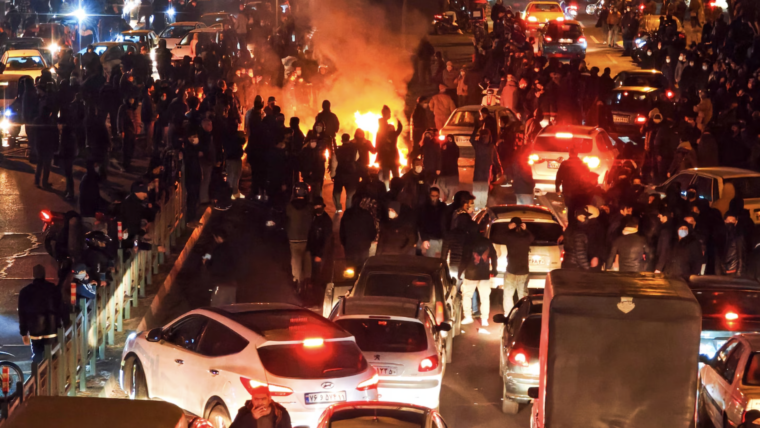
None of this means the Islamic Republic has resolved its growing contradictions at home. Iranian authorities estimate that the war displaced around two million workers; inflation has reached approximately 77 per cent; the top 10 per cent of Iranians hold more than half the national wealth, while around a third of the population lives near the poverty line. Clerical authority, security networks and state-linked conglomerates have absorbed the gains of the parallel and sanctioned economies, hollowing out the public sphere and replacing it with rent-seeking that depends on continued repression. The January 2026 protest wave was suppressed by force rather than met with reform. Funds that were released from frozen assets due to the MoU or reconstruction efforts are at risk of being redirected back into the hands of the country’s oligarchy, rather than benefiting those who truly suffered because of the war.
Yet the war has also generated an unexpected wave of nationalism that has temporarily united Iranians across political divisions. As one commentator observed, Trump and Netanyahu have managed to unite Iranians more than any Iranian politician could. The war and the bloodshed of January forced a re-examination of long-held beliefs about the West and about protest itself. The plan, it was said, had been to do to Iran what was done to Syria, Libya, Iraq, and Afghanistan: a collapse followed by occupation. There is now a widespread understanding that the idea of America as saviour is a lie.
As I argued earlier in Iran’s Crisis: Opposition and the Limits of Regime Change, the decisive question for Iran’s future is whether the Iranian state can manage its own contradictions while it builds its external position. The real challenge now is not deterring Washington, but whether Tehran can convert a moment of forced cohesion into a durable compact with its own citizens. Without sustained reforms and successful implementation of the agreement, the temporary solidarity generated by the war could give way to renewed tensions between state and society.
The limits of American power
Trump’s posture is contradictory. He has been publicly framing the agreement as a triumph, telling reporters in Versailles that the United States has “taken their money, it’s their money” and that sanctions relief will come “as soon as they behave”. Republican voices have pointed out that the concessions match Iran’s wartime gains rather than reversing them, and that the timing reflects pressure to bring oil prices down before November’s midterm elections. As I argued in War, Energy and the Limits of Empire, this is the disconnection between American means and American ends. Iran will not accept in 2026 what it accepted in 2015.
Domestic opposition is no longer limited to Republicans. Rahm Emanuel, a veteran Democratic powerbroker, dismissed the agreement as “the memorandum of misunderstanding” at the FT Weekend Festival, telling the audience that Trump “just got schooled” by Tehran. “While the president thinks he wrote a book called The Art of the Deal,” Emanuel said, “they’re going to teach him a lesson, the Persian lesson, the art of the negotiation.”
Behind all of this lies the deeper structural contest. The conflict with Iran is part of the longer competition between the United States and China for the conditions of the global order. Iran matters to Washington because it operates outside American influence and maintains substantial economic ties with Beijing. More than ninety per cent of Iranian oil exports now flow to China; Iran’s economy has become integrated into the Chinese-led network of production and trade that Washington increasingly treats as a strategic challenge. The local conflict is being fought, in part, over a global question to which there is no local answer.
Empire in decline
Washington’s choice to attack Iran, the refusal to settle the nuclear question through containment, and the comfort with regional disorder were strategic preferences, pursued consistently across both parties. Instability has been an American tool. The preference for disorder remains; what has changed is the empire’s capacity to control the disorder it has created. The MoU itself reflects this: a fourteen-point text in which the United States accepts a sixty-day window, surrenders the missile and proxy questions to a later phase, and commits to withdrawing its forces from “the proximity” of Iran within thirty days of any final settlement. What is replacing American orchestration is not a vacuum but a regional economic system finding its own working form, with Iranian industrial capacity, Gulf pragmatism and Qatari mediation as its parts. As the world economy moves into a major crisis, most of the world, and the global south above all, will bear the heaviest cost of a war the United States launched without calculating the consequences. This is not American power disappearing; it is American power being doubted. From Jordan to Egypt and Pakistan to South Africa, ordinary people question what Washington can deliver. Where it once commanded compliance through the assumed capacity to determine outcomes, it must now negotiate compliance against the visible record of an outcome it could not deliver.
The lesson of this conflict, as of Iraq and Libya before it, is that democracy cannot be imposed by outside intervention. Iran’s future will be determined by the Iranian people, through the long struggle among social forces inside the country, and not by the strategic preferences of Washington, Brussels or Tel Aviv. Social movements have already put the Islamic Republic under pressure to reform: the Women, Life, Freedom uprising and the protest waves that followed have won considerable concessions on their own terms. That direction, not outside intervention that has consistently hindered Iran’s democratic aspirations, is where the country’s future lies.