Within days of regional mediators signalling “significant progress” in US–Iran nuclear talks — including reports that Iran was prepared to move enriched uranium beyond its borders — Israel launched what it termed a “pre-emptive strike.” The United States followed. By last Saturday evening, President Trump announced that Iran’s Supreme Leader, Ali Khamenei, along with seven senior officials, had been killed. One strike hit a school, killing 85 people in southern Iran. This escalation follows a broader pattern of interventionism in recent months: the bombing of Venezuela, the sustained economic siege of Cuba, and the imperialist restructuring represented by the Board of Peace in Gaza.
However, attacking Iran is fundamentally different from the interventions in Venezuela or the invasion of Gaza, and Trump and some of his advisers were cognizant of this distinction. Recent reporting suggests that US involvement was shaped not only by long-term strategic calculation but also by immediate alliance dynamics. The Washington Post reported that Saudi Crown Prince Mohammed bin Salman, despite publicly endorsing diplomatic efforts, privately urged the US to strike. The same report indicated that Secretary of State Marco Rubio informed congressional leaders that the mission’s timing and objectives reflected the fact that Israel intended to attack with or without American participation.
If Washington’s decision was shaped by alliance pressures as much as by strategic calculation, then the justification of “imminent threat” becomes even more questionable. The language of emergency obscures a deeper objective: not immediate defence, but political transformation.
Regime Change and Consequences
The escalation was presented to eliminate “imminent threats,” yet there was no public evidence showing an impending Iranian attack or any operational nuclear weapon. This situation unfolded during negotiations mediated by Oman, where the foreign minister proposed a compromise: Iran could enrich uranium but would have to export it immediately to avoid accumulating weapons-grade stockpiles, with the possibility of negotiating expanded inspections. Despite these concessions and diplomatic efforts, tensions remained high. Similar to the negotiations in June 2025, the US and Israel launched attacks without Congressional or UN approval. The pattern suggests that the objective was not immediate defence, but political transformation.
Trump’s military action primarily targets regime change. His social media posts suggested an expansive war, stating, “People should come out,” but advising, “For now, stay at home and come out when we tell you.” His rhetoric implied not only deterrence, but also political transformation imposed by the US and Israel. Yet history raises serious doubts about whether such a strategy can succeed.
Air power alone rarely produces regime change. Since World War I, bombing campaigns have seldom created compliant governments; they often strengthen nationalism and resistance. “Smart bombs” create an illusion of control, but wars generate humanitarian crises and instability that escape planning. Political outcomes remain uncertain, and adversaries can respond in ways that expand conflict. This has been evident in Afghanistan, Iraq, and Libya, where the US missiles launched in the name of peace and democracy delivered only greater death, destruction, and civil war, ultimately resulting in US defeat. In Syria, a Washington-compliant government emerged only after fifteen years of brutal civil war and relentless bombing, leaving the country fractured and devastated.
Some invoke Kosovo as an example of “successful” coercion, yet even there, precision bombing coincided with ground escalation and produced massive displacement, hundreds of thousands of refugees, and large-scale casualties. Precision in the air does not guarantee control over political consequences.
Iran is not a single-person regime. Even with leadership removed, power remains institutionalised within clerical councils, Revolutionary Guard command structures, intelligence networks, and state-linked economic conglomerates. Decapitation does not dissolve institutions; it may temporarily fragment authority or consolidate hardline elements under emergency rule. Air power cannot construct a democratic organisation, unify a fragmented opposition, or build institutional alternatives. Iraq and Afghanistan demonstrate that military superiority does not translate into institutional reconstruction. More often, it produces fragmentation, securitisation, and prolonged instability.
Foreign Intervention and Consequences
Iran’s modern history has been repeatedly shaped by great-power intervention. From Britain’s decisive influence in the late nineteenth and early twentieth centuries, including support for Reza Shah, to the joint US–UK coup of 1953 that overthrew Mohammad Mossadegh, external interference has been central to Iran’s political trajectory. In many ways, this outside involvement has impeded the country’s transition to democracy.
Anti-imperialism, therefore, became a foundational pillar of the 1979 Revolution and the Islamic Republic of Iran. Outside intervention did not end with the monarchy; it took new forms through sanctions, secret operations, financial exclusion, and military pressure. The ongoing presence of Western powers shows that they view instability not primarily as a threat to democracy but as an opportunity to pursue economic interests and regional control. Today, modern imperialism increasingly uses direct force and weakens international legal standards.
Under such conditions, war does not automatically weaken authoritarian structures; it often strengthens security institutions. Regimes invoke survival logic. Political dissent becomes securitised. Civic space contracts, and authoritarian tendencies deepen. At the same time, great powers frequently collaborate with such regimes as long as their strategic interests are protected, as numerous examples in the Gulf illustrate.
In this historical and structural context, the idea that the US, a nation complicit in actions in Gaza, providing unconditional support to Israel, possessing overwhelming military superiority, and responsible for more foreign interventions than any other country, would take steps to improve the lives of Iranians is not only implausible but also dangerously misleading. To suggest otherwise would create a cruel illusion, considering the serious stakes involved.
Why Do the US and Israel Want War Now?
For the US, Iran represents more than a concern about nuclear proliferation; it is viewed as a structural obstacle to regional dominance. The Middle East is crucial to global energy markets and maritime routes. Despite increased domestic energy production, controlling energy corridors is key to maintaining global influence. Dominance in the Gulf limits competitors’ capabilities, especially China, which heavily depends on access to the region for its economic growth and long-term military strategy.
Sanctions and sustained pressure have pushed Iran closer to China and Russia. Iran is now heavily dependent on China as its primary oil customer, accounting for more than 80 per cent of its oil exports. Weakening Iran, therefore, limits rival powers’ ability to consolidate influence through Tehran. It narrows Russia’s strategic options and complicates energy coordination, even if Moscow may benefit from short-term price increases. At the same time, it makes it more difficult for China to advance its Belt and Road Initiative across West Asia. By containing Iran, the US seeks to reinforce its regional leverage and strengthen its position within the broader competition among global powers.
While the US approaches Iran through the lens of global power competition, Israel’s calculus is more immediately regional. Israel wants to preserve clear military and strategic superiority. A weaker Iran, one of its most significant regional rivals, reduces challenges to Israeli power across the occupied Palestinian territories, Lebanon, Yemen and the wider Middle East. Degrading Iran’s missile capabilities and weakening its defence posture consolidates Israel’s regional position.
Escalation and Asymmetry
As the war escalates, its geographical boundaries inevitably broaden. Consequently, Iran has expanded its attacks to include Israel and US bases in Bahrain, Qatar, Kuwait, the UAE, and Saudi Arabia. While regional governments condemned violations of sovereignty, Iranian officials declared that “there are no red lines after this aggression.” Yet Iran cannot directly strike the US without risking overwhelming retaliation. Instead, it targets the regional states that host US military infrastructure, the platforms through which the US power is projected.
The Gulf region is home to a vast network of US military installations. Bahrain is home to the US Fifth Fleet, while Qatar hosts Al Udeid Air Base. Kuwait and the UAE serve as important logistical hubs. Furthermore, Saudi Arabia and other Gulf states conduct rotational deployments and coordinate their operations. These facilities form the backbone of the US’s security infrastructure in the region. In an asymmetric confrontation, they become the most accessible pressure points. Retaliatory strikes, therefore, follow a recognisable logic: when a state cannot strike the core, it targets the periphery of the core’s power-projection network.
However, Gulf vulnerability is not limited to military installations. The monarchies are deeply embedded in global financial and energy systems. US–Gulf relations extend beyond defence agreements into sovereign wealth investments, infrastructure partnerships, real estate ventures, and energy coordination. Senior political figures in Washington, including President Trump and his family, such as Jared Kushner, maintain substantial financial ties to Gulf economies. Political authority, military infrastructure, and private capital are closely linked.
Recent attacks on energy facilities demonstrate how quickly regional escalation translates into global economic disruption. Following drone strikes on Qatar’s LNG infrastructure at Ras Laffan, one of the world’s largest liquefied natural gas export terminals, production was suspended. European and Asian gas prices surged by as much as 30 per cent in the first trading session after the attack. Brent crude rose as much as 13 per cent intraday before settling roughly 8 per cent higher, marking its steepest daily increase in nearly three years (Financial Times, 02/03/2026).
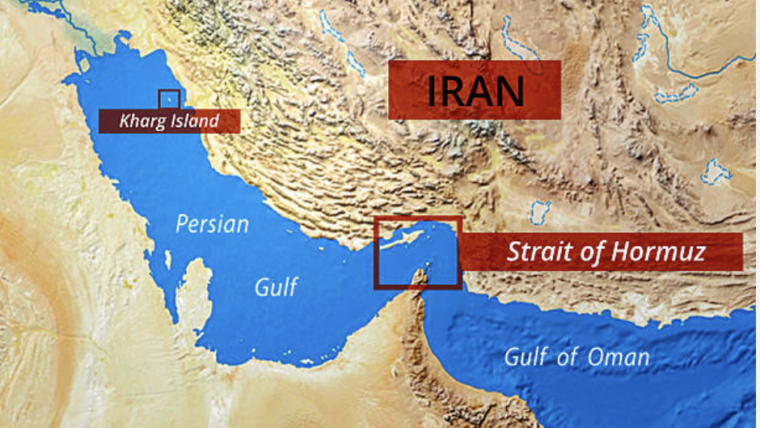
The disruption was heightened by paralysis at the Strait of Hormuz, a narrow waterway through which approximately one-fifth of the world’s oil and gas is transported. Shipping slowed significantly as insurers withdrew coverage and vessels came under attack. Oil and LNG tankers accumulated at the mouth of the Gulf. Freight rates from the Middle East to Asia reportedly doubled or tripled within days, in some cases equating to transport costs of roughly $15 per barrel.
The attack on Saudi Arabia’s Ras Tanura refinery was the first major strike on oil infrastructure since the conflict began. This refinery is the largest on the Gulf Coast and processes about 500,000 barrels of oil each day. Even precautionary shutdowns at facilities of this scale can significantly affect global oil markets. As a result, airlines, logistics companies, and manufacturing sectors faced immediate pressure from rising fuel costs. European benchmark indices fell, airline and hospitality stocks dropped sharply, and gold prices increased by more than 2 per cent as investors sought safe havens for their assets.
These developments indicate that the conflict has expanded beyond mere military confrontations. Energy corridors, maritime chokepoints, insurance systems, and commodity markets are now directly involved. What starts as regional retaliation quickly escalates into a global macroeconomic shock. Even as reluctant participants, Gulf states find themselves increasingly drawn into the conflict.
One possible objective of this strategy may be to pressure Gulf leaders to urge Washington to de-escalate and pursue renewed diplomacy. Yet such manoeuvring carries considerable risk. As energy infrastructure becomes a target, the boundary between regional war and systemic economic destabilisation grows increasingly fragile.
The Political Consequence
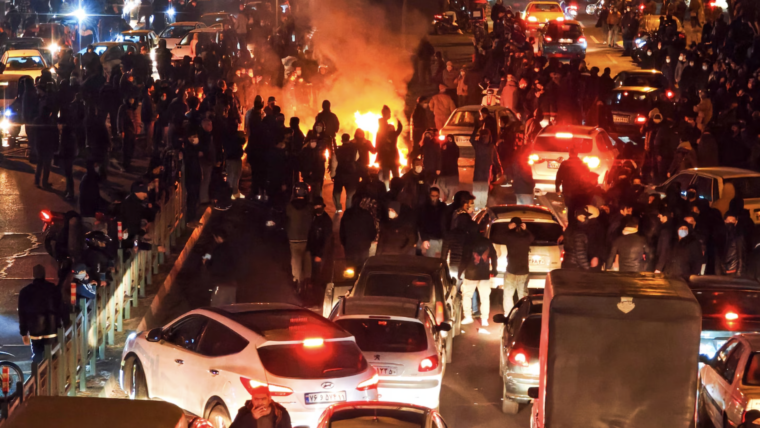
Prior to escalation, Iran was already navigating a deep legitimacy crisis. Economic strain from sanctions and structural mismanagement, oligarchic wealth concentration, declining purchasing power, and generational alienation had eroded public trust. The January 2026 protests were not episodic unrest; they reflected accumulated grievances embedded in the state’s politics and economy.
External military intervention does not resolve these contradictions. It does not reduce inflation, dismantle oligarchic networks, or create accountable institutions. Instead, it risks transforming a contested political order into a securitised survival state.
Under external assault, regimes invoke narratives of existential threat. Security institutions expand authority. Emergency logic displaces reform logic. Political dissent is increasingly framed as collaboration. Civic space contracts, not because society becomes less critical, but because the cost of dissent rises.
One may reject authoritarian governance while simultaneously rejecting foreign bombardment. These positions are analytically distinct. The central question is not whether the regime is repressive; it is whether military escalation can plausibly generate stability, democratic transition, or regional equilibrium.
Air power can degrade infrastructure, disrupt command structures, and signal deterrence. It cannot construct political legitimacy, build institutional capacity, or unify fragmented social forces. Political order emerges from negotiated authority and organised social agency, not from aerial coercion.
The shift from negotiation to assassination marks more than tactical escalation; it represents a structural move from diplomacy to hegemonic enforcement. It reflects broader struggles over regional dominance, energy corridors, and global alignment. Yet the pursuit of strategic supremacy often produces unintended systemic instability.
We are at a critical juncture with the escalation of the war throughout the Middle East. For those who want peace, it is crucial to urge governments to de-escalate tensions, stop the flow of weapons, and focus on diplomatic solutions. The top priority must be to prevent further escalation and promote stability.