As I discussed in my previous blogs, the current crisis in Iran stems from the essential conflict between labour and capital. In simple terms, this is a contradiction of the severe economic conditions most ordinary Iranians are under. Increasing inflation, housing problems, healthcare, job security, and dignity. For most Iranians, political crisis is not experienced through abstract debates about ideology or diplomacy, but through everyday economic insecurity.
This contradiction also shapes Iran’s relationship with global capitalism and imperialist rivalry. The Islamic Republic does not exist outside the world system. It is embedded in it through sanctions, trade restrictions, and geopolitical confrontation. War, threats, and diplomacy are not separate from this relationship; they are part of it. Iran’s position in the global system is defined by both internal class relations and external power struggles.
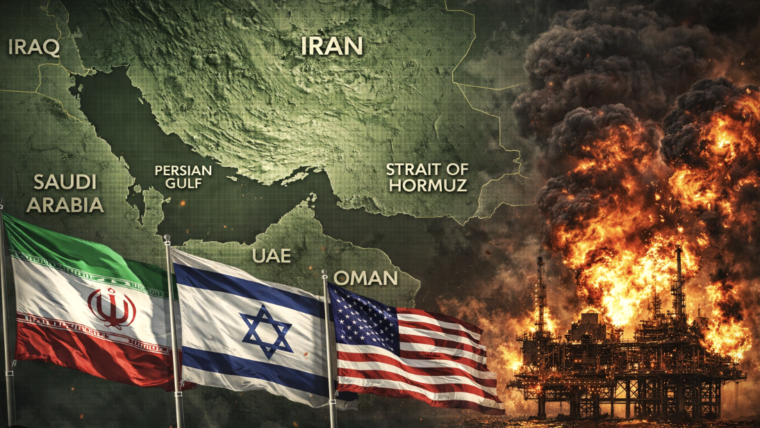
Domestically, the central contradiction remains labour versus capital. Internationally, it is the tension between Iran’s political order and Western-led global capitalism. Today, this tension is intensified by the far-right turn in US foreign policy. Militarism, regime-change agendas, and strategic competition with China all shape Washington’s approach. Iran is caught in the middle of these global struggles.
During Donald Trump’s presidency, there was widespread speculation that the United States was seeking a “second Reza Khan”, a strongman figure, possibly emerging from within the security establishment, who could stabilise the system while aligning it more closely with Western interests. This would not necessarily involve restoring the monarchy. It could involve figures drawn from the Revolutionary Guards, the regular army, or even civilian networks.
Some commentators compared this to Venezuela, where external pressure was aimed to engineer internal regime change. But Iran is not Venezuela. Iran has stronger state institutions, deeper security networks, and a far more complex regional position. Military intervention or economic strangulation is much less likely to produce rapid political collapse.
Moreover, any such strategy faces a fundamental obstacle: Ayatollah Khamenei. As long as he remains in power, a major externally driven transformation is extremely difficult. He has shown repeatedly that he prioritises regime survival above all else. He is unlikely to accept fundamental change voluntarily. At the same time, those within the system are reluctant or unable to challenge him directly.
This makes elite engineering projects highly speculative. The US government itself appears to have little confidence in exile-based opposition groups, whether monarchist or Mojahedin. Official statements increasingly suggest that Washington is not actively pursuing these options.
Historical experience also reminds us that regime change does not always require popular support. The 1953 coup against Mohammad Mossadegh and the rise of Reza Shah were elite-driven processes. If a new leadership could promise rapid reintegration into global markets and economic stabilisation, parts of society might initially give it a chance. But such transformations are fragile. They generate new conflicts, new demands, and new forms of instability.
None of these elite solutions is desirable; they do not address structural inequality, labour exploitation, or social injustice. They merely replace one ruling authoritarian coalition with another.
At the same time, Khamenei’s commitment to preserving the Islamic Republic may lead him, in extreme circumstances, to tolerate limited adaptation. If faced with total collapse, he might accept controlled change to save the system. But the probability remains low. Much depends on future political and economic shocks.
If negotiations with the West fail completely, military options may reappear. Targeted strikes or covert operations could be used to weaken key figures. But such actions would dramatically alter regional dynamics and carry unpredictable consequences.
Internal fragmentation within the opposition also plays a dangerous role. When opposition forces focus on mutual hostility rather than building coherent programmes, they unintentionally create space for authoritarian alternatives. Some monarchist groups already openly promote violent revenge. Even before gaining power, they speak in the language of brutality. This reflects a deeply troubling political culture.
The Mojahedin, meanwhile, concentrate on discrediting all rivals rather than building alliances. Although efforts at unity exist, contradictory political visions make cooperation extremely difficult.
Attempts to construct broad “united fronts” also face serious problems. Some self-described liberals and republicans openly support foreign military intervention. Others still hope for alliances with reformist factions inside the regime. These positions are incompatible with independent democratic politics.
History offers important lessons. Before 1979, the Tudeh Party promoted a “united front against dictatorship” based on vague appeals to “patriotic and freedom-loving forces.” In practice, this facilitated Islamist dominance. Such slogans lacked organisational substance. Even in the late 1970s, they were already outdated.
Today, similar slogans reappear in new forms. But without strong social organisations, they remain empty.
The condition of much of the Iranian left is also worrying. Many groups failed to take principled positions on the war in Gaza. Some issued confused and contradictory statements that undermined their credibility. Without ethical clarity and political consistency, unity becomes impossible. In my previous blogs, I have mentioned that the struggle for Palestinians is not separate from the Iranian struggle; they are part of the same coin. Equally, one can condemn the Iranian state’s repression and the US and Israeli interventions’ brutality in the Middle East.
External fragmentation strategies further deepen these dangers. Israel’s long-term objective is to weaken and divide Iran. Encouraging separatism and militarisation risks civil war. Parts of Baluchistan, Khuzestan, and other peripheral regions could become sites of armed conflict. State collapse would not bring freedom. It would bring chaos.
Who would fill the political vacuum? Rival armed groups, oligarchic networks, and foreign-backed factions would compete for power. Ordinary people would suffer most.
It is important to recognise that not all violence originates with the state. The Islamic Republic bears primary responsibility for decades of repression. But some protest-related violence has also emerged independently. In unstable situations, violence tends to multiply.
Regional actors such as Qatar, Turkey and Saudi Arabia oppose war not out of sympathy for Iran, but out of self-interest. They fear regional destabilisation, refugee flows, and economic disruption. After October 7, these concerns intensified.
The “Libya scenario”, state collapse followed by fragmentation, remains a real possibility in the event of a military attack. Civil war is far more likely under external intervention than under organised popular mobilisation. Well-planned, nonviolent, class-based movements pose far less risk to social cohesion.
This does not mean change is impossible. In the long run, many Iranians may reject authoritarian rule. But sustainable transformation requires organisation, strategy, and social power. It cannot be imported from outside or imposed from above.
What we see today is a system trapped in crisis without resolution. Economic hardship, political repression, elite fragmentation, and geopolitical pressure reinforce each other. Protest erupts, is contained, and returns. Institutions decay. Oligarchic networks consolidate.
Breaking this cycle requires rebuilding independent organisations, social movements, and political institutions rooted in everyday struggles. Without this foundation, Iran will continue to oscillate between stagnation and instability.
The future will not be decided in Washington, Tel Aviv, or elite boardrooms. It will be shaped by the slow, difficult work of social organisation and political renewal from below.